#41 Deeper Into Outer Space | Echo Juliet
Inspired producer and music industry instigator Echo Juliet on the making of her new EP, ‘Lift Your Face to the Sun’...

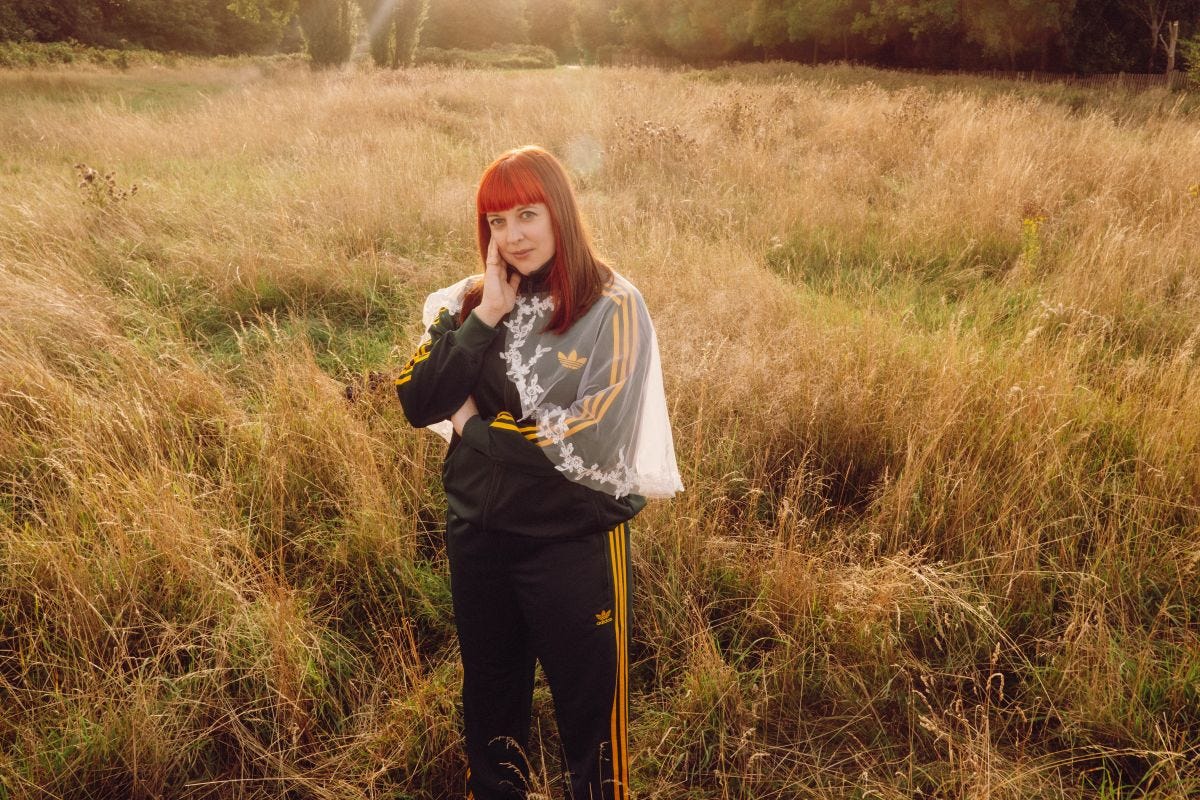
From teaching music production for Saffron and working as a director of DJ community Selextorhood, to her own artist material, Echo Juliet is a mover, shaker and forward-thinker within electronic music’s sonic circles.
With percussion a defining pillar of her sound, Echo Juliet is the alias of Emily Jones, an Essex-born producer who exchanged her classical music training for Ableton, a midi vibraphone, and decks.
Emily’s take on dance music lies in the colourful hinterlands between broken beat and UK garage with her music likened to Gold Panda and Four Tet.
Her latest EP, ‘Lift Your Face to the Sun’, supported by Help Musicians and DJ Mag, beautifully encapsulates this aesthetic, inspired by grief, joy and the world around her.
In this interview, Emily shares how the new EP came about alongside the challenges and opportunities for electronic artists in the digital age…
Where did the inspiration for this new EP come from?
I started making this music almost exactly two years ago when my family was going through a tough time. We lost someone close in tragic circumstances, and I didn’t really have a way to process what had happened but making music became a kind of antidote.
I built a daily ritual of producing music and walking in the park listening back to what I’d made the day before. Something about the combination of making music, walking, and being in green spaces felt healing. So perhaps it’s not surprising that there are some really strong themes running through this release and my upcoming ones around sunlight, darkness and nature.
‘Lift Your Face to the Sun’ originally started out as a more downtempo track with a harp melody as the main feature, but over the summer, with some feedback from another producer Joni Newham, I reworked it into the more club-oriented track it is now.
“The final version of ‘Lift Your Face to the Sun’ was inspired by a moment at We Out Here festival a few years back where I found myself looking up at the light coming through the trees while listening to Alexander Nut play some great music.”
‘Halfway in Light’ emerged from a jam almost fully formed - I was trying to explore what light and dark would feel like in sound, thinking about balance and the fact that it’s not possible to be happy all the time. Musically I was inspired by a lot of the Chicago house I’d been listening to around the time. The title is a reference to a lyric from ‘Mary Poppins’, which was one of my childhood favourite films.
Could you talk about the sonic palette for these tracks - what has informed it?
The short answer is percussion, lots of percussion. I studied classical percussion at uni, so those sounds are always my starting point, and I’m a long-time fan of jazz and broken beat so those influences sometimes come through too. I’m also drawn to the kind of warm, twinkly sounds you find in the music of Four Tet and Bonobo, especially harp and bell sounds.
‘Lift Your Face to the Sun’ actually has a lot more live instrumentation than some of my upcoming music: it features my electric kalimba with lots of acid distortion added, some beautiful live harp recorded by Hayley Capel, and it was the first track I made with my Arturia Minifreak synth which is where that big sparkly sound in the second half of the track came from.
I often use field recordings in my music too - ‘Lift Your Face’ includes some birdsong that I recorded during lockdown, and the sound of kids playing at break time in the school next door to my house, both things that feel really uplifting and evocative of sunny days for me. ‘Halfway in Light’ uses the sound of water dripping as part of the drums, to add to the shimmery feel.
How do you work in the studio? What is your way into your music from a gear perspective?
I produce mainly ‘in the box’ just using my laptop, but I often start new tracks on hardware devices and then transfer them to Ableton. I have a Novation Circuit Rhythm, which I used to build the groove for ‘Halfway in Light’ initially, before developing it further on the computer. I find I get really different results from using the Circuit Rhythm because it has no screen. Somehow that makes me think differently.
Tuned percussion is a core element of my sound so I have a few tuned percussion sample-based instruments that I often go to first e.g. SonicCouture’s pan drum, marimba and vibraphone.
Are there any esoteric pieces of kit or gear that you utilise in your studio?
I don’t know if an electric kalimba counts as esoteric, but I love playing around with it because I can easily record it right away and also get some unusual sounds from it (it’s basically a kalimba with a pickup inside, like an electric guitar). I also have a Malletkat, which is a midi vibraphone/xylophone. I mostly use it for live performance but do sometimes use it as part of the writing process. I’m not very good at playing the piano, so the Malletkat helps me to play midi chords which have a more human feel than something programmed using a mouse.
How important was the backing from Help Musicians UK in bringing the EP to life? How essential is this for an artist at your level?
Releasing music is pretty expensive if you want things like radio plugging and PR, which can really help the music to reach a new audience and gain recognition in the industry. I was originally supposed to be releasing this music with a label, but they had to step away relatively late in the process. So the Help Musicians support has been vital for this release to happen in an impactful way - otherwise I would have been scrapping around to try to get the money together for it. The funding was in partnership with DJ Mag, so having their endorsement has also been really helpful.
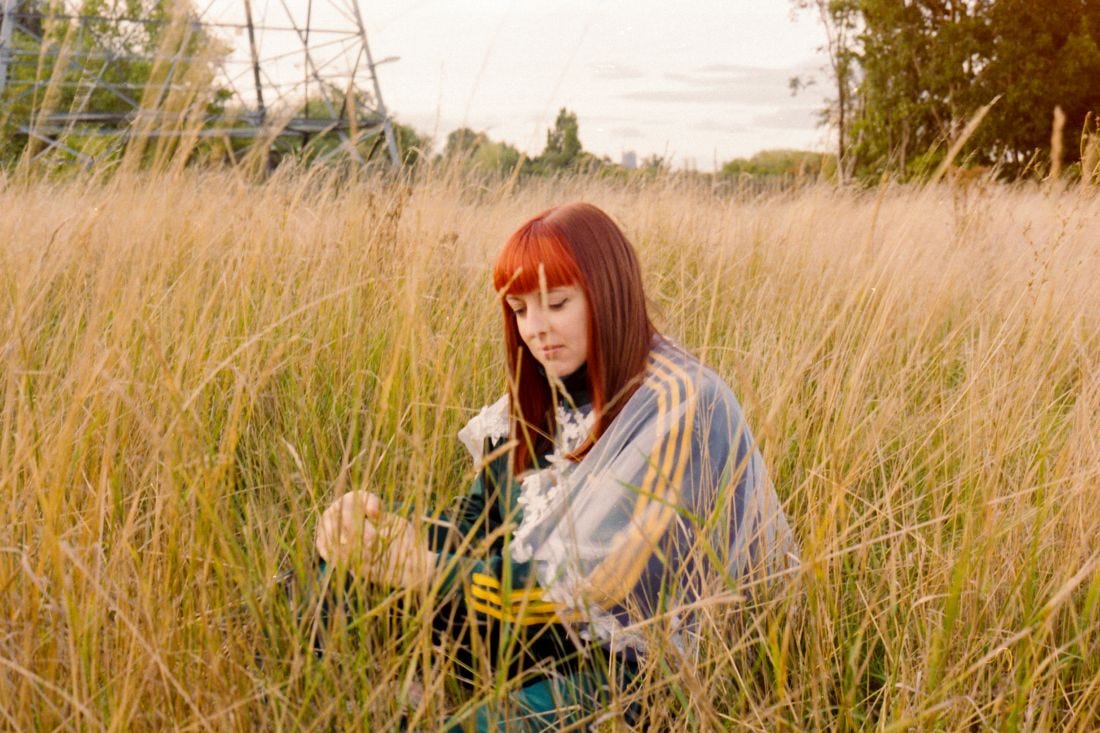
I’ve been following you on Instagram for a while now, how has your relationship with social media evolved?
In the last 18 months I’ve learned a lot about how to use the Instagram algorithm to reach new people, which has been quite transformational. I had my first post go viral in November 2024, and that was actually how the label found me. It feels quite powerful to be able to use that tool to suddenly find a global audience, but it definitely comes with highs and lows - it’s very hard to avoid tying your self-worth to the performance of your latest post or using the platform to seek validation.
I also discovered I really enjoy subverting expectations and sharing very honest content to try and show people what’s really going on behind the scenes in music. For example, at the end of last year I shared figures for how much I earned and a breakdown of all my different income streams.
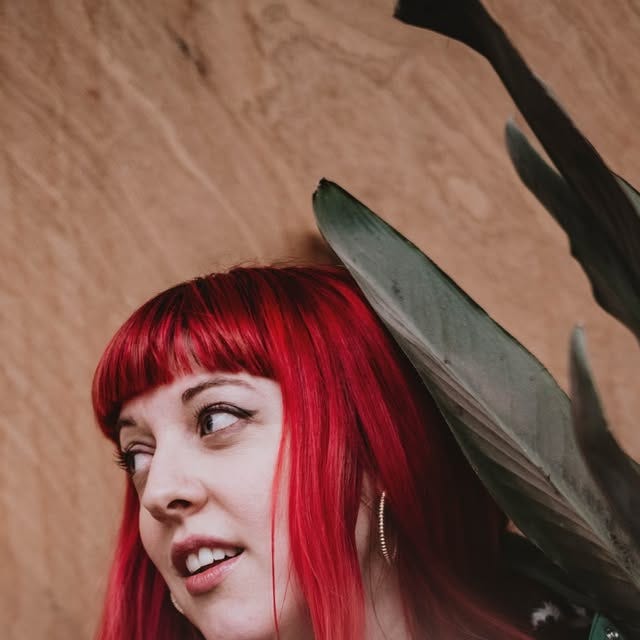
Now I try to see it as a marketing tool to draw people into my visual and sonic world, and then I encourage those people to join my mailing list so that I’m not reliant on the algorithm to stay in touch with them.
You’ve also been a music industry activist/representative for different organisations too - how does this feed into your own creative output? And how important do you think this work is to the wider music community?
I’m fortunate to be able to work behind the scenes in the music industry as a freelancer alongside my work as an artist, because it all feeds into each other. I might not have as much disposable income as someone who had a day job in the corporate world, but often the people I meet in my ‘day jobs’ and activist roles are helpful in my artistic career and vice versa.
Having learned to play drums as a teenager and then working behind the scenes in jazz before I got into electronic music, I have always been hyper aware of the gender imbalances in the music industry.
So for me, it’s a no-brainer to try to change the situation, whether that’ s through teaching women and gender non-conforming people to produce music for Saffron, being a director of Selextorhood, or in the new role I’ve just started for Yorkshire Sound Women Network.
“Better diversity and inclusion rarely happens overnight. It’s thanks to concentrated effort from a patchwork of different organisations across the country. I also think it’s important to be the change you want to see, especially as electronic music becomes increasingly ‘corporate’ and owned by venture capitalists.”
What is next for you and your music?
This is the first in a series of four EPs I have coming out between now and July! So I’ve got lots more new music to come. I’m also putting together a new live set which will hopefully be debuting in late June/early July.
But in the meantime, I’ll be playing a live set in Coventry with Bar Pandora on 7th March and supporting The Egyptian Lover at Hare and Hounds Birmingham on 11th March.
‘Lift Your Face to the Sun’ is out now.
Connect with Emily | Instagram | Threads | Facebook | TikTok